A retailer needs a qualified handbag sourcing partner when launching a private label collection, which requires more than finding a handbag manufacturer. The right partner helps transform market trends, design ideas, target pricing, and production requirements into commercially successful products.
Many fashion retailers discover that working directly with factories can become challenging when collections involve multiple designs, seasonal changes, special craftsmanship, or complex supplier coordination. A strong handbag sourcing partner bridges the gap between creative direction and production execution.
SOCCI helps retailers, fashion brands, importers, and wholesalers develop handbag collections by connecting:
Trend Intelligence → Commercial Design → Target Price Engineering → Technical Feasibility → Product Development → Supplier Matching → Production Follow-up
SOCCI is not replacing factories. Factories are responsible for manufacturing capability, production execution, and quality execution. SOCCI connects market demand, design decisions, engineering, and production coordination to help buyers develop differentiated and commercially viable handbag collections.
Before starting a private label handbag project, buyers should evaluate whether their partner can manage the complete product development journey—not only provide a production quotation.
What Is a Handbag Sourcing Partner?
A handbag sourcing partner is a professional company that helps fashion businesses develop, source, and manage handbag collections from concept to production.
Unlike a traditional handbag manufacturer that focuses mainly on manufacturing, a sourcing partner supports the complete development process, including:
- Market and trend research
- Collection planning
- Product concept development
- Material and craftsmanship selection
- Prototype development
- Cost engineering
- Factory and supplier matching
- Production coordination
- Quality follow-up
For retailers and fashion brands, the value of a sourcing partner is not simply access to suppliers. The value is reducing product development risks while creating collections that match customer demand and business goals.
A successful private label handbag collection requires alignment between:
- Consumer trends
- Brand positioning
- Design direction
- Target retail price
- Manufacturing feasibility
- Production timeline
- Quality expectations
A sourcing partner helps connect these decisions.
Why Choosing the Right Handbag Partner Matters Before Launching a Private Label Collection
Private label handbag development involves many decisions before a product reaches the market.
A collection can fail because of:
- Designs that are attractive but difficult to manufacture
- Costs that exceed the target retail price
- Materials that are unavailable or inconsistent
- Poor communication between suppliers
- Delayed prototypes
- Quality problems during production
For mid-to-large fashion retailers, these risks can impact seasonal launches, inventory planning, and brand reputation.
The lowest-cost handbag supplier is not always the best choice.
A reliable handbag product development partner should help buyers answer:
- Does this design match current market demand?
- Can this product achieve the target margin?
- Is the construction commercially realistic?
- Which supplier has the right technical capability?
- How can production risks be controlled?
The goal is not simply producing handbags.
The goal is building a repeatable product development system.
Key Criteria for Evaluating a Handbag Sourcing Company
1. Ability to Understand Your Market and Customer
The first question is not:
“Can they make handbags?”
Many suppliers can manufacture handbags.
The more important question is:
“Can they understand what products your customers will buy?”
A strong handbag sourcing company should understand:
- Fashion trends
- Seasonal collection planning
- Consumer preferences
- Retail positioning
- Competitive products
- Commercial price points
For example, a European fashion retailer developing a summer collection may need more than a basic tote bag supplier. They may need support identifying trends in:
- Natural materials
- Resort-inspired designs
- Straw weaving techniques
- Crochet details
- Lightweight construction
- Sustainable materials
A sourcing partner should translate market signals into product opportunities.
2. Product Development Capability
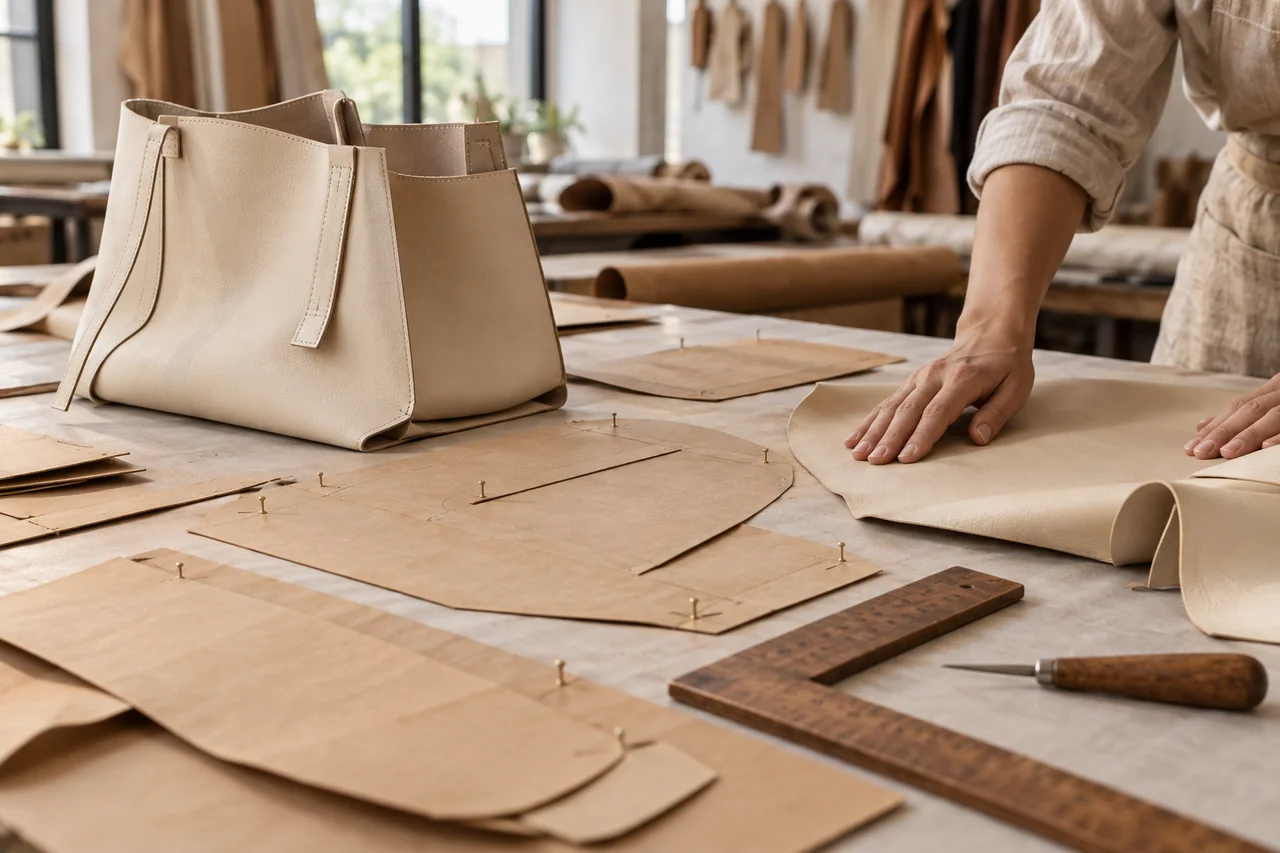
Private label success depends heavily on product development expertise.
A capable partner should support:
Concept Development
Turning market inspiration into structured product concepts.
Design Direction
Creating:
- Mood boards
- Collection themes
- Color directions
- Material suggestions
- Product variations
Technical Development
Ensuring designs can move from concept into production.
This includes:
- Construction analysis
- Material selection
- Hardware decisions
- Prototype improvements
- Cost optimization
A handbag product development partner understands that beautiful design must also be commercially feasible.
A product that cannot achieve the target price, quality level, or production timeline is not a successful design.
3. Ability to Engineer Costs Without Destroying Value
Many buyers focus only on unit price.
However, professional sourcing requires understanding the relationship between:
- Design complexity
- Material choice
- Manufacturing process
- Order quantity
- Supplier capability
- Target retail price
A good partner provides target price engineering.
This means finding the right balance between:
Brand Value + Customer Appeal + Production Feasibility + Profit Margin
For example:
A fashion handbag may include:
- Embroidery
- Beading
- Special fabrics
- Unique hardware
- Handcrafted elements
The question is not simply:
“Can this be made cheaper?”
The question is:
“How can this design achieve the desired market impact while remaining commercially viable?”
4. Supplier Network and Manufacturing Understanding
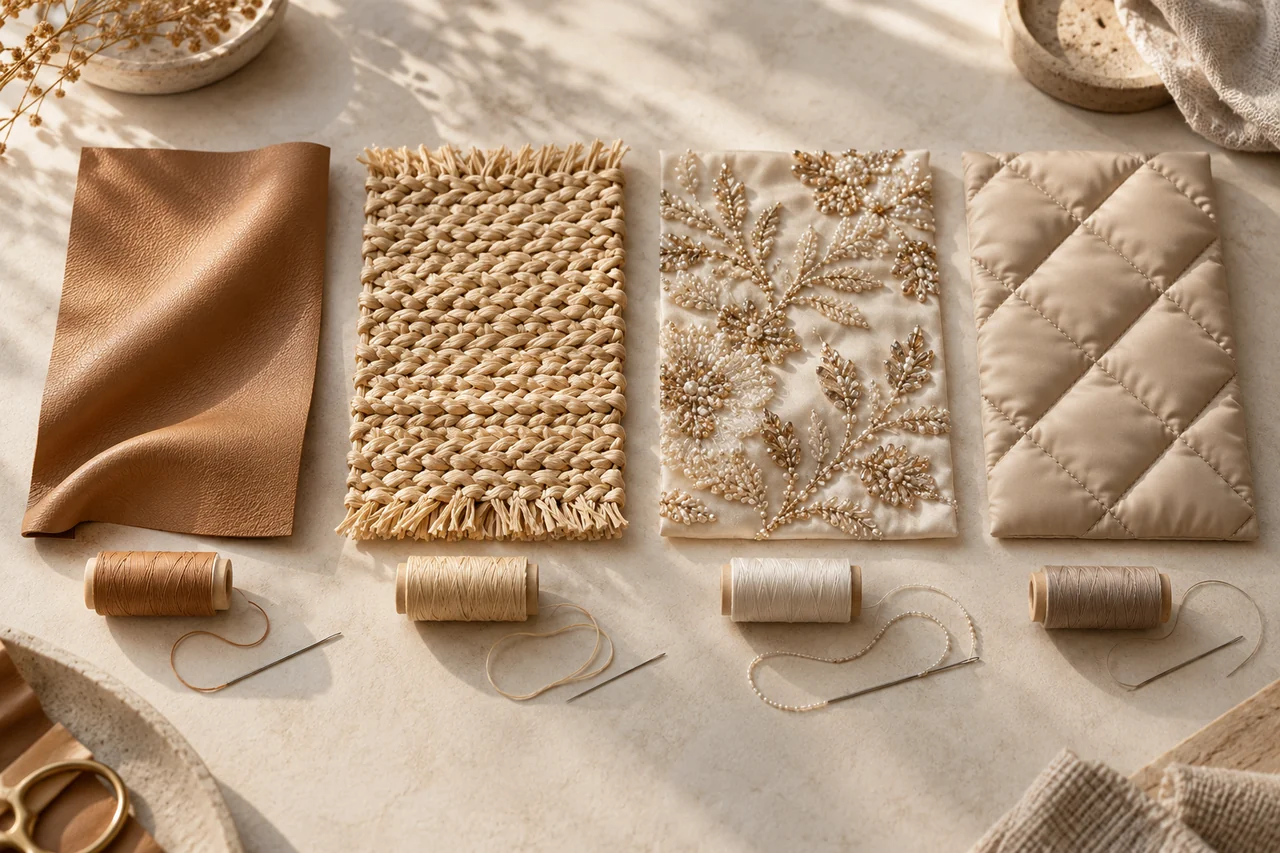
A sourcing partner should have access to suitable handbag suppliers based on product requirements.
Different handbags require different capabilities.
Examples:
Evening Bags
May require:
- Beading
- Embroidery
- Decorative craftsmanship
- Premium finishing
Fashion Handbags
May require:
- Trend-focused materials
- Seasonal development speed
- Flexible production capability
Specialty Products
May require:
- Straw weaving
- Crochet techniques
- Box bag construction
- Complex assembly
A professional sourcing partner does not simply provide one factory option.
They match the product requirements with the appropriate manufacturing capability.
5. Communication and Project Management Ability
For international retailers, communication and coordination are critical.
A reliable handbag sourcing partner should demonstrate:
Clear Communication
- Responsive and proactive updates
- Clear documentation
- Transparent timelines
- Honest feedback about feasibility
Project Management
- Prototype tracking
- Sample approval process
- Production scheduling
- Quality checkpoint coordination
- Shipment follow-up
Problem-Solving
- Identifying risks early
- Proposing alternatives when issues arise
- Managing changes during production
- Coordinating between multiple suppliers
Poor communication creates:
- Misunderstood requirements
- Delayed approvals
- Quality surprises
- Missed deadlines
Strong communication protects the collection timeline and reduces costly mistakes.
6. Experience with Your Product Category
Not all handbag sourcing companies have equal expertise across all product types.
Some specialize in:
- Leather goods
- Fashion handbags
- Evening bags
- Travel bags
- Sustainable materials
- Luxury positioning
Before selecting a partner, confirm they have relevant experience in:
- Your product category
- Your quality level
- Your price range
- Your market segment
A partner experienced in luxury leather handbags may not understand mass-market tote bag production.
A partner focused on fast fashion may not have access to premium craftsmanship suppliers.
Match the partner’s expertise with your collection goals.
7. Quality Standards and Control Process
Quality problems discovered during production or after shipment create serious business risks.
A professional sourcing partner should have:
Quality Planning
- Clear specifications
- Material approval process
- Pre-production samples
- Quality benchmarks
Production Monitoring
- In-process inspections
- Construction verification
- Finishing checks
- Packaging review
Final Quality Control
- Pre-shipment inspection
- Random or full inspection
- Defect management
- Corrective action process
Ask potential partners:
- What is your quality control process?
- How do you handle quality issues?
- Can you provide inspection reports?
- What happens if products fail inspection?
Quality control is not simply checking finished products.
Quality control starts during product development and continues through every production stage.
8. Flexibility and Scalability
Fashion retail is unpredictable.
A collection may need adjustments based on:
- Market feedback
- Sales performance
- Trend changes
- Customer requests
A good sourcing partner should offer:
Development Flexibility
- Design modifications
- Material substitutions
- Construction alternatives
- Sample iterations
Production Flexibility
- Order quantity adjustments
- Seasonal timing changes
- Reorder capability
- Color or style variations
Growth Support
- Ability to scale production
- Access to multiple suppliers
- Capacity planning
- Long-term partnership approach
Rigid partners create business constraints.
Flexible partners help adapt to market opportunities.
9. Transparent Pricing and Commercial Terms
Pricing transparency is essential for long-term partnership.
A professional sourcing partner should clearly explain:
Cost Structure
- Manufacturing cost
- Material cost
- Service fees
- Additional charges
Payment Terms
- Deposit requirements
- Payment milestones
- Currency options
- Payment methods
Order Terms
- Minimum order quantities
- Lead times
- Delivery terms
- Cancellation policies
Avoid partners who:
- Provide unclear quotations
- Add unexpected charges
- Change prices without explanation
- Refuse to document terms
Transparent commercial terms protect both parties and build trust.
10. References and Track Record
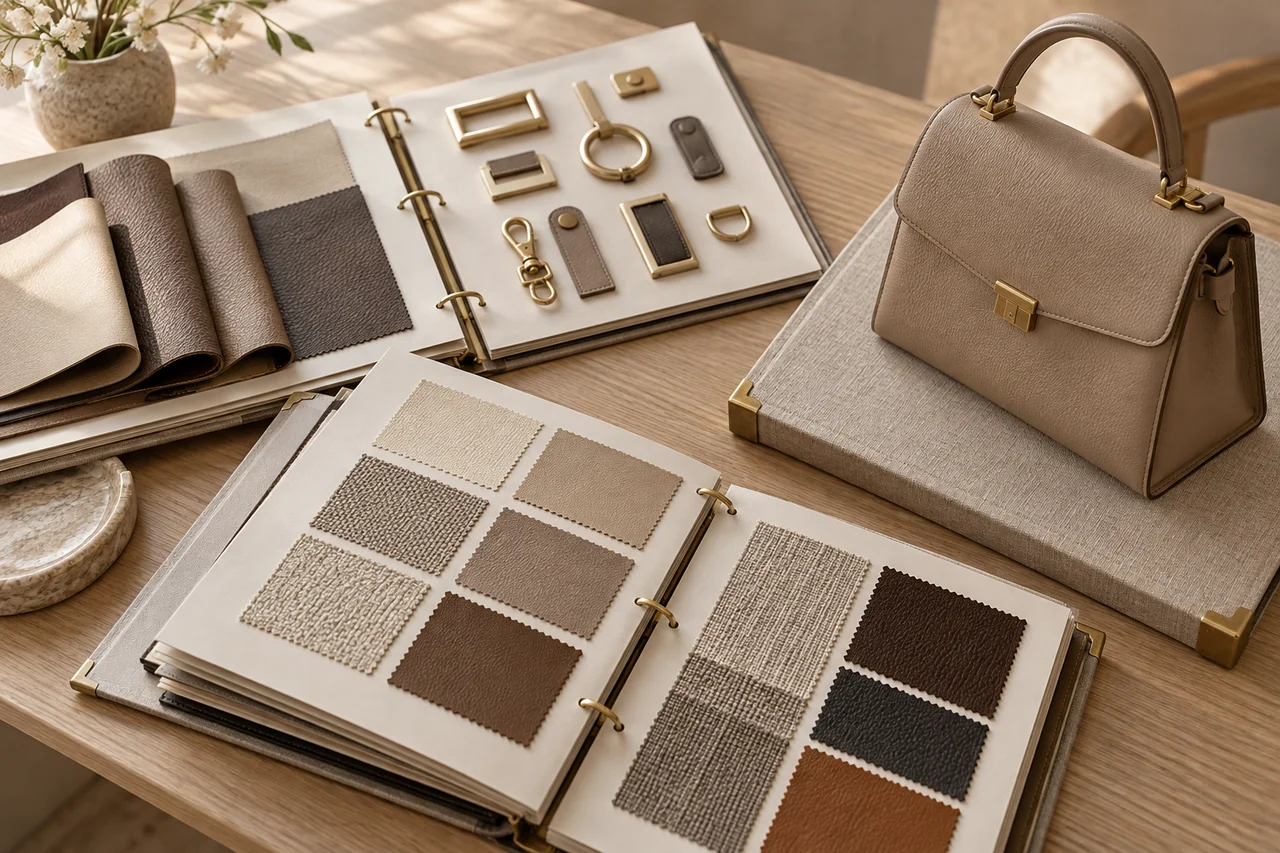
Before committing to a partnership, verify the partner’s experience.
Request:
References
- Similar projects completed
- Client testimonials
- Case studies
- Portfolio examples
Verifiable Experience
- Years in business
- Markets served
- Product categories
- Production volume
Red Flags
- Unwilling to provide references
- No verifiable project history
- Inconsistent information
- Overpromising results
A partner with a strong track record demonstrates reliability and capability.
Questions to Ask a Potential Handbag Sourcing Partner
Before starting a private label collection, schedule detailed discussions with potential partners.
Ask:
About Their Process
-
How do you approach product development for a new client?
-
What is your typical timeline from concept to production?
-
How do you manage prototype development?
-
What is your quality control process?
About Their Capabilities
-
What product categories are you most experienced in?
-
Which markets do you primarily serve?
-
How many suppliers do you work with?
-
Can you support sustainable or specialty materials?
About Their Communication
-
Who will be my main point of contact?
-
How do you handle communication across time zones?
-
What project management tools do you use?
-
How often will I receive updates?
About Commercial Terms
-
What is your pricing structure?
-
What are typical minimum order quantities?
-
What are your payment terms?
-
How do you handle modifications or changes?
About Quality and Risk Management
-
How do you ensure production quality?
-
What happens if quality issues occur?
-
How do you manage production delays?
-
What is your approach to risk mitigation?
The answers to these questions reveal whether a partner can support your private label collection successfully.
Red Flags When Evaluating a Handbag Sourcing Partner
Some warning signs indicate a partnership may create problems:
Poor Communication
- Slow or inconsistent responses
- Vague or unclear answers
- Difficulty understanding requirements
- Language barriers that create confusion
Unrealistic Promises
- Extremely low prices with no explanation
- Guaranteed results without understanding your needs
- Very short lead times for complex products
- Claims of unlimited capability
Lack of Transparency
- Unwilling to explain their process
- Refusing factory information
- No clear pricing breakdown
- Avoiding questions about experience
Limited Understanding
- No knowledge of current trends
- Unable to discuss product development
- Focused only on manufacturing
- No questions about your market or goals
Weak Quality Focus
- No quality control process described
- No inspection reports offered
- Dismissive of quality concerns
- No plan for handling defects
Trust your instincts.
If a partnership feels unclear, risky, or unprofessional, continue searching for a better match.
How SOCCI Helps Retailers Develop Private Label Handbag Collections
SOCCI provides professional handbag product development and sourcing services for fashion retailers, brands, importers, and wholesalers.
Our Approach
Market Understanding
We research trends, analyze consumer preferences, and identify commercial opportunities to guide collection planning.
Product Development
We translate market insights into product concepts, manage design direction, develop prototypes, and engineer target pricing.
Supplier Coordination
We match product requirements with appropriate manufacturing capabilities, coordinate multiple suppliers, and manage production timelines.
Quality Management
We establish quality standards, monitor production processes, conduct inspections, and ensure products meet specifications.
Project Communication
We provide clear updates, transparent documentation, proactive problem-solving, and responsive support throughout the development process.
Our Role
SOCCI does not replace factories.
Factories provide manufacturing capability, production execution, and quality execution.
SOCCI connects:
- Market demand
- Design decisions
- Technical engineering
- Supplier coordination
- Production management
We help buyers develop handbag collections that are differentiated, commercially viable, and ready for market success.
Conclusion
Choosing a handbag sourcing partner is not simply selecting a supplier.
The right partner becomes an extension of your product development team, helping transform ideas into successful collections.
Before starting a private label handbag project, evaluate whether your partner can:
- Understand your market and customer
- Support complete product development
- Engineer costs while preserving value
- Access appropriate manufacturing capabilities
- Communicate clearly and manage projects effectively
- Maintain quality standards
- Provide flexibility and scalability
- Offer transparent commercial terms
- Demonstrate a proven track record
The lowest price is not always the best choice.
The right choice is a partner who reduces risk, supports your goals, and helps build a repeatable system for collection development.
SOCCI helps fashion businesses develop handbag collections that succeed commercially.
Contact us to discuss your private label handbag project.