A sourcing executive’s practical guide to separating real capabilities from factory showroom theater
The Problem With Factory Tours and Sample Bags
Here’s a scenario every fashion buyer knows too well:
You visit a handbag factory. The showroom gleams. Sample bags look flawless. The sales manager assures you they can handle anything—structured leather, hand-beading, straw weaving, custom hardware. The price sounds reasonable. You sign a development agreement.
Three months later, you’re stuck in the fourth round of sample corrections. The beading doesn’t match your color standard. The straw panels sag because there’s no internal reinforcement. The hardware finish scratches off after two weeks. Your spring launch window has closed.
What went wrong?
You evaluated the factory based on finished samples and verbal promises instead of operational evidence. A beautiful showroom bag proves only one thing: someone, somewhere, once made a good bag. It doesn’t prove the factory has repeatable systems to engineer, cost, coordinate, and produce your collection at commercial scale.
After two decades sourcing handbags across Guangzhou, Yiwu, and Wenzhou for 87 brands, I’ve learned this: the factories that show you process documentation upfront are the ones that deliver on time and on spec.
Five Types of Evidence That Predict Success
Before you commit development budget or pay sampling fees, ask for these five categories of proof. Factories with mature systems will have them ready. Factories running on improvisation won’t.
1. Trend Research Documentation
What to ask for:
- Seasonal mood boards showing how the factory translates runway trends into commercial product recommendations
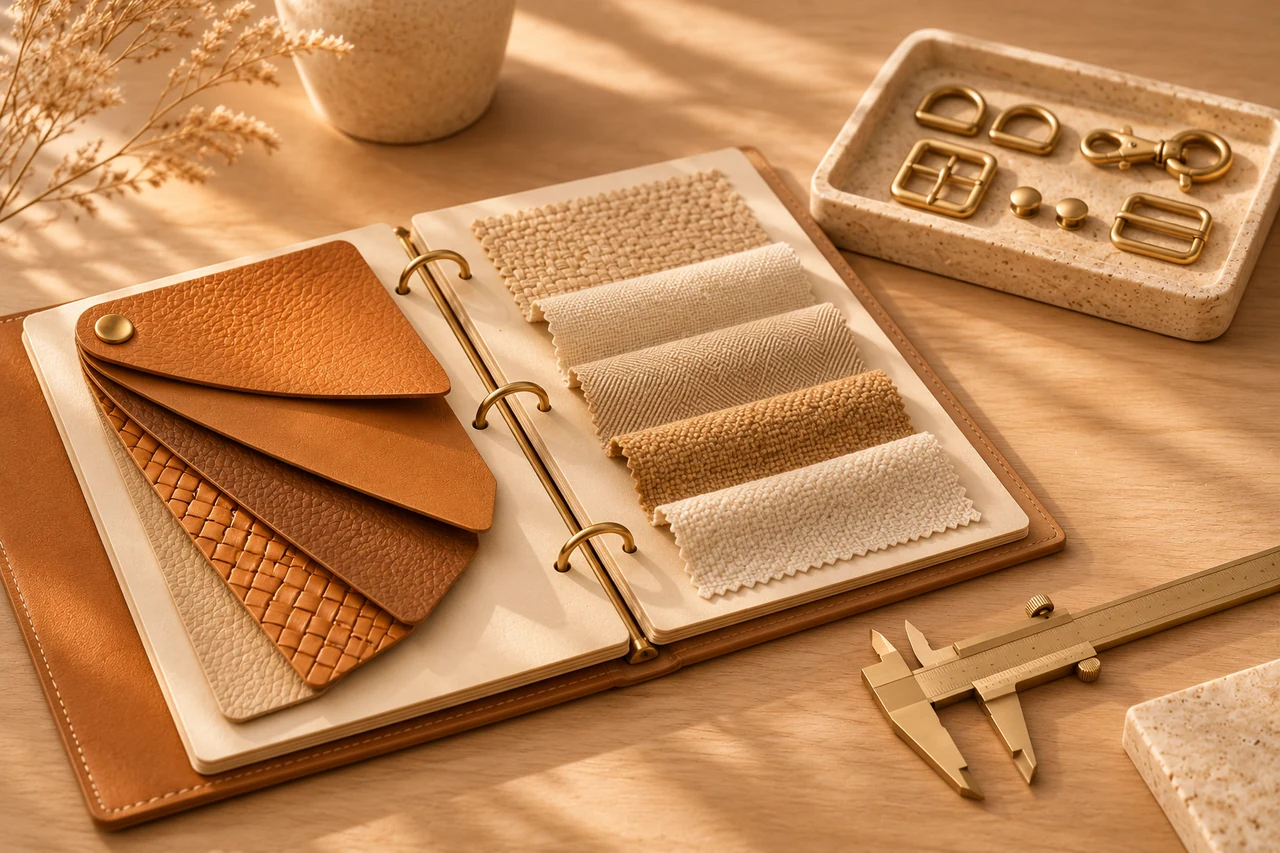
- Curated material libraries with swatches, hardware samples, and lining options organized by season and price tier
- Sell-through analysis or market feedback from similar products they’ve developed
Why it matters:
A factory that waits for you to hand over complete specs is a manufacturer, not a development partner. A real partner tracks trends, sources new materials proactively, and can challenge your design if they see a structural or cost problem early.
I worked with a brand that wanted to replicate a $2,400 woven leather tote they saw at a trade show. The factory we eventually chose didn’t just say “yes”—they showed us three material alternatives with different weave densities, explained the labor cost implications of each, and recommended a hybrid construction that cut production time by 40% without compromising the look.
That kind of input only comes from teams that study the market, not just execute orders.
Red flag: The factory has no material library and asks you to source all components yourself.
2. Technical Engineering Records
What to ask for:
- Completed tech packs from previous projects showing internal construction details (reinforcement boards, stress-point stitching, hardware attachment methods)
- Sample revision logs documenting what went wrong in Prototype 1 and how it was corrected in Prototype 2
- Pattern-making workflows showing how they convert 2D sketches into 3D bag structures
Why it matters:
Converting a designer’s sketch into a durable, balanced handbag requires engineering. Handles need reinforcement at load-bearing points. Structured bags need internal frames or stiffening materials. Closures need to align with the bag’s center of gravity or they’ll pull awkwardly when worn.
Factories that don’t document this process rely on individual workers’ intuition. When that worker quits or gets reassigned, your production quality becomes a lottery.
Ask to see how they handled a structurally complex bag—something with mixed materials, unusual silhouette, or high-stress hardware. If they can walk you through the engineering decisions (why they added a certain board, changed a seam placement, or reinforced a strap attachment), that’s proof of systematic problem-solving.
Example:
A client wanted a bucket bag with a drawstring closure and a detachable chain strap. The first factory we approached said “no problem” and delivered a sample where the chain attachment points tore out after three uses because they hadn’t reinforced the leather with backing material.
The factory we ended up using showed us their standard reinforcement protocol: they add a 2mm piece of Texon board behind every metal D-ring attachment point and test the pull strength to 15kg before approving production. They had photos documenting this across different bag styles.
That’s the difference between guessing and engineering.
Red flag: The factory can’t explain why they constructed a sample a certain way, only that “this is how we always do it.”
3. Cost Engineering Breakdowns
What to ask for:
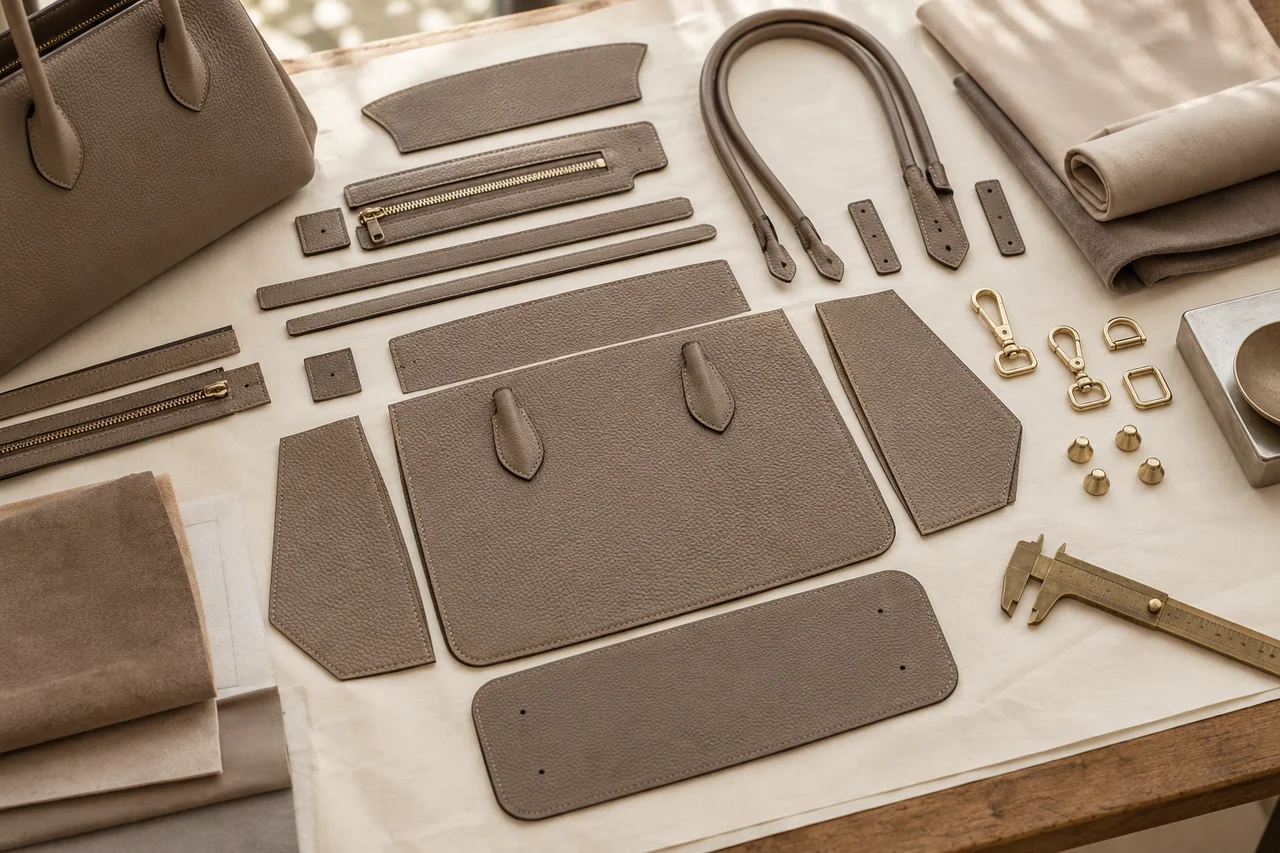
- Itemized Bill of Materials (BOM) showing raw material costs, hardware unit prices, labor allocation, and finishing fees
- Examples of value engineering—cases where they brought an over-budget style back to target price through construction or material adjustments
- Transparent yield calculations (how much leather waste, how many bags per hide, etc.)
Why it matters:
Cost overruns usually happen because no one engineered the product to a target price before sampling. You approve a beautiful prototype, then discover the factory quoted based on inefficient material usage, premium hardware, or labor-intensive construction that doesn’t scale.
Professional partners work backward from your retail price. If you’re targeting a $150 bag with a 65% gross margin, they know your landed cost needs to be around $52. They’ll design within that constraint or tell you upfront what tradeoffs are required.
Real example:
| Cost Element | Initial Quote | Engineered Alternative | Savings |
|---|---|---|---|
| Main body leather | $12.50 (full-grain cowhide) | $7.80 (corrected-grain split leather with embossed finish) | -$4.70 |
| Interior lining | $3.20 (polyester jacquard) | $1.60 (polyester twill, same hand-feel) | -$1.60 |
| Hardware | $2.40 (custom logo zipper pull) | $0.90 (stock pull with laser engraving) | -$1.50 |
| Edge finishing | $1.80 (hand-painted edge coat) | $0.60 (folded and stitched edge) | -$1.20 |
| Total FOB | $58.70 | $48.20 | -$10.50 |
The engineered version hit the target price with zero visual difference to the end customer. But it required someone to systematically question every material choice and construction method.
Red flag: The factory gives you a single price with no breakdown, or says “we can’t go lower” without explaining what’s driving the cost.
4. Multi-Craft Coordination Systems
What to ask for:
- Portfolio showing work across different categories: structured leather, beading, embroidery, straw/raffia weaving, crochet, rigid box bags
- Master production schedules showing how they coordinate components from specialized subcontractors
- Quality control protocols for harmonizing standards across different craft suppliers (color matching, finishing consistency, etc.)
Why it matters:
Most seasonal collections mix crafts: a straw tote with leather handles, a beaded evening bag with a satin lining, a woven bucket bag with metal chain details. No single factory has all these capabilities in-house.
The question isn’t whether they outsource—everyone does. The question is whether they manage subcontractors systematically or just throw parts over the wall and hope they come back right.
I once worked on a resort collection that required:
- Hand-woven rattan panels (made by artisans in Zhejiang)
- Vegetable-tanned leather straps (Guangzhou leather workshop)
- Custom metal ring hardware (metal finishing shop in Zhongshan)
- Final assembly and QC (main factory in Huadu)
The key was having one party responsible for:
- Setting unified color standards (Pantone swatches sent to all suppliers)
- Coordinating delivery schedules (rattan panels ready Week 6, leather straps Week 7, hardware Week 8, assembly Week 9)
- Running pre-assembly inspections (checking rattan weave density, leather dye consistency, hardware plating durability before components reached final assembly)
Without that central coordination, you get mismatched colors, delayed deliveries, and finger-pointing when something goes wrong.
Red flag: The factory claims they do “everything in-house” but you see no evidence of specialized equipment (beading frames, straw weaving jigs, metal plating tanks).
5. Quality Control Audit Records
What to ask for:
- AQL (Acceptable Quality Limit) inspection reports from recent production runs, showing inline checks and final audit results
- Raw material test certificates (leather thickness variance, hardware heavy metal testing, lining colorfastness)
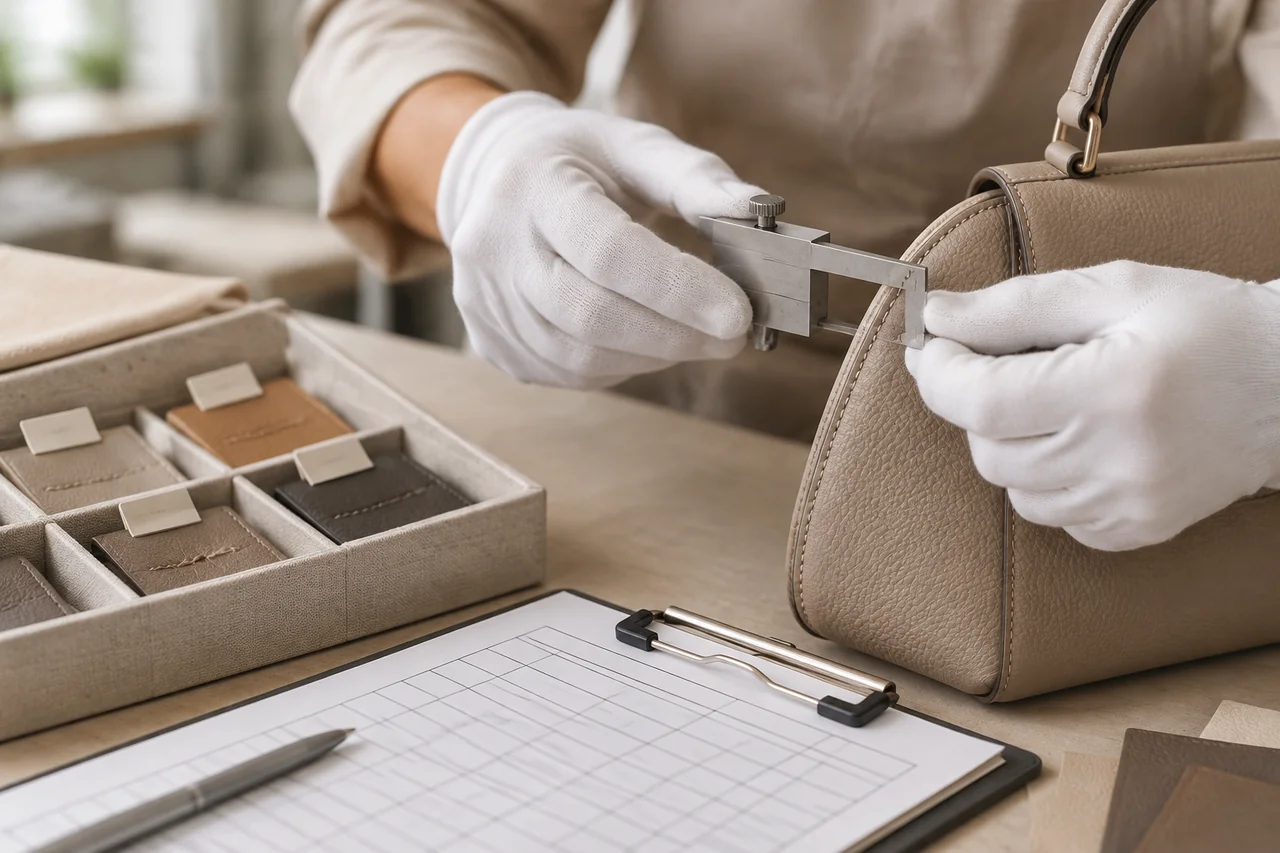
- Photographic QC documentation showing how they inspect critical defects (stitching alignment, hardware scratches, color matching under standard lighting)
Why it matters:
“High quality” is meaningless without defined standards and inspection discipline. What’s the acceptable tolerance for color variation? How do you measure stitching straightness? When does a hardware scratch become a reject vs. acceptable?
AQL inspection reports answer these questions objectively. An AQL 2.5/4.0 standard (common for fashion accessories) means:
- 2.5% acceptable defect rate for major flaws (affects function or salability)
- 4.0% acceptable defect rate for minor flaws (cosmetic but not critical)
Factories that run AQL audits will have reports showing:
- Sample size inspected
- Number of major/minor defects found
- Pass/fail decision
- Photos of typical defects
If they don’t have this documentation, they’re either not inspecting systematically or not documenting what they find—both bad signs.
Example of what to look for in an AQL report:
Red flag: The factory says “we inspect everything” but can’t show you an actual inspection report with data and photos.
Factory vs. Development Partner: Evidence Comparison
| What to Verify | Basic Factory Response | Professional Development Partner Response |
|---|---|---|
| Trend research | “Send us your designs and we’ll make them” | Shows seasonal mood boards, material swatches, and market feedback from similar products |
| Technical engineering | Copies your sketch directly without questioning structure | Reviews feasibility, identifies stress points, recommends reinforcement or construction changes |
| Cost breakdown | Gives a single FOB price, take it or leave it | Provides itemized BOM with material alternatives and yield calculations |
| Craft specialization | “We can do everything” (but you see no specialized equipment) | Shows portfolio across leather, beading, straw, embroidery with subcontractor coordination protocols |
| Quality systems | “Don’t worry, we check quality” | Shares AQL reports, material test certificates, and photographic inspection records |
Case Study: Why Evidence Matters More Than Sample Quality
Client: US-based contemporary accessories brand
Project: 8-style Spring collection with mixed materials (straw, leather, beading, metal hardware)
Target retail: $180-$280 per bag
Order quantity: 1,200 units per style
Vendor A (chosen based on showroom samples):
- Showed beautiful hand-crafted bags in showroom
- Quoted competitive FOB pricing
- Promised 90-day delivery
- Could not provide tech packs, cost breakdowns, or AQL reports
- Said “trust us, we’ve done this many times”
Result:
- First samples arrived 3 weeks late with sagging straw panels (no internal reinforcement)
- Beading color didn’t match Pantone standard (no documented color control process)
- Hardware tarnished after two weeks (no salt spray test certificates)
- Took 4 sample rounds to get it right
- Missed retail launch window by 6 weeks
- Emergency airfreight added $8/unit to landed cost
Vendor B (chosen based on evidence):
- Provided tech packs from similar straw+leather projects showing reinforcement specs
- Shared itemized BOM with material alternatives to hit target cost
- Showed AQL reports from previous productions with photo documentation
- Presented coordination schedule for straw artisans (Zhejiang), leather workshop (Guangzhou), and metal hardware supplier (Zhongshan)
Result:
- First sample approved with minor color adjustment
- All 8 styles developed in parallel using documented engineering standards
- Production completed on schedule
- Final AQL inspection: 97.3% pass rate
- Collection launched on time, 68% sell-through in first 6 weeks
The difference wasn’t skill—both factories employed talented craftspeople. The difference was systems and documentation. Vendor B had repeatable processes that didn’t depend on one person’s intuition.
How to Audit a Potential Partner (Practical Checklist)
Before signing a development agreement or paying sampling fees, request:
☐ Commercial intelligence:
- Seasonal trend boards or mood boards
- Material swatch library (leather, hardware, linings, specialty materials)
- Examples of product recommendations they’ve made to other brands
☐ Technical capability:
- 3-5 completed tech packs from previous projects (with client names redacted)
- Sample revision logs showing how they resolved structural problems
- Explanation of their pattern-making and construction engineering workflow
☐ Cost transparency:
- Itemized BOM for a similar product
- Example of value engineering (bringing an over-budget style back to target price)
- Yield calculations or material waste percentages
☐ Craft coordination:
- Portfolio showing leather, beading, straw, embroidery, box bag construction
- Master production schedule example showing how they coordinate subcontractors
- Quality control protocols for harmonizing standards across suppliers
☐ Quality systems:
- AQL inspection reports (redacted) from at least 2 recent productions
- Raw material test certificates (leather, hardware, lining)
- Photos showing their QC inspection setup and lighting standards
If they can’t provide at least 3 out of 5 categories, they’re not operating as a development partner—they’re a basic manufacturer hoping to figure it out as they go.
What This Means for Your Next Collection
Choosing a handbag development partner based on sample quality and pricing alone is like hiring a chef based on one meal they cooked in perfect conditions. You need to see their prep systems, ingredient sourcing, recipe documentation, and quality control—the things that determine whether they can deliver consistently under real production constraints.
The factories and sourcing partners who survive in 2026 are the ones who can prove their capabilities before you commit budget. Showroom samples and verbal promises don’t cut it anymore. Buyers want to see the engineering records, cost breakdowns, coordination systems, and inspection protocols that predict reliable execution.
Before you sign your next development agreement, ask for evidence. If they can’t show it, they don’t have it.
Frequently Asked Questions
What’s the difference between a handbag factory and a development partner?
A factory executes production based on your complete specifications. A development partner works upstream—helping translate trends into products, engineering designs for manufacturability, coordinating specialized crafts, and managing costs from concept through delivery.
Why do I need to see AQL reports?
AQL reports prove the factory inspects systematically using defined standards. Without them, “quality control” is just a claim. AQL documentation shows sample sizes, defect definitions, pass/fail criteria, and actual results—the only objective measure of inspection discipline.
Can a factory really do leather, beading, straw weaving, and embroidery all in-house?
Rarely. Each craft requires specialized equipment, trained artisans, and different quality control protocols. Most professional partners coordinate a network of specialty suppliers under unified standards rather than claiming false in-house capability.
What if a factory refuses to share cost breakdowns?
That’s a red flag. Transparent partners share itemized BOMs because they’re confident in their pricing logic and want you to understand cost drivers. Opacity usually means inefficiency, hidden markups, or inability to engineer to target price.
How do I know if trend research is real or just marketing?
Real trend research connects to actionable product decisions. Ask: “Based on this trend, what material or construction would you recommend for our brand?” If they can’t translate trends into specific sourcing or engineering recommendations, it’s decoration, not research.
Need help auditing your current handbag supply chain?
SOCCI specializes in connecting fashion brands with verified development capabilities across trend research, technical engineering, cost optimization, multi-craft coordination, and quality management. [Schedule a supply chain audit consultation] to review your current processes and identify capability gaps before your next collection development cycle.