Selecting a handbag development partner shouldn’t start and end with FOB quotes. Mid-to-large fashion retailers who focus purely on unit cost often face problems downstream: missed trend cycles, protracted sampling loops, quality inconsistencies, and fragmented supply chains. The real evaluation comes down to six operational capabilities: trend intelligence, commercial design translation, technical feasibility, target cost engineering, multi-craft sourcing coordination, and quality control execution.
For brands managing seasonal collections, private label programs, or multi-category accessories lines, your development partner functions as the operational bridge between retail strategy and factory output. Getting that relationship right means looking past the price sheet.
—
Why Price-Only Comparisons Miss the Point
Unit price reflects one narrow slice of the equation: the cost to assemble a finished bag under ideal circumstances. It doesn’t account for what happens when a sample arrives structurally flawed, or when your beaded evening clutch comes in 40% over retail target with no engineering alternatives on the table.
Retailers who select partners based strictly on the lowest bid frequently run into the same issues:
- Dead inventory: A bag that ships late or misreads seasonal proportions ends up heavily marked down, erasing any margin advantage from a cheaper FOB.
- Revision fatigue: Factories built purely for volume production often lack technical product developers. You end up cycling through four, five, six rounds of samples to fix basic construction problems.
- Craft bottlenecks: Budget suppliers struggle with mixed-material SKUs—structured frames, hand-beaded hardware, woven straw panels—leading to inconsistent output across what should be a cohesive line.
The hidden costs pile up fast. A smarter evaluation framework measures total commercial value, not just the per-unit assembly figure.
The Six Pillars of Partner Evaluation
Here’s how to structure your assessment:
|
01 Trend Intelligence Do they track silhouettes, materials and category performance before you finalise the line plan? |
02 Commercial Design Can they architect a collection — volume drivers, bridge styles, statement pieces — instead of assembling samples? |
03 Technical Feasibility In-house pattern makers, structural testing, construction flaws caught before the first sample ships? |
|
04 Target Price Engineering Do they engineer internal construction and material yield to hit margin, or just quote and shrug? |
05 Multi-Craft Coordination Beading, straw weaving, crochet, box bags — orchestrated under unified specs and one delivery stream? |
06 Quality Control Inline and final AQL procedures, material consistency checks, documented pre-shipment audits? |
1. Trend Intelligence
Basic factories wait for finished tech packs. Strong development partners track market signals before you finalize your line plan.
Questions to ask:
- Do they monitor category performance, emerging silhouettes, and material directions across key retail markets?
- Can they identify white space in your current assortment—new hardware finishes, updated proportions, overlooked price tiers?
- Do they present curated material swatches and mood boards tailored to your brand positioning?
Partners who invest in trend research help you stay ahead of the curve instead of chasing it six months too late.
2. Commercial Design & Collection Architecture
Translating creative vision into balanced, sellable handbag lines requires structure. A well-architected collection includes core volume drivers, mid-tier bridge styles, and high-margin statement pieces—all visually cohesive but serving different merchandising roles.
What strong partners deliver:
- Concept boards that organize styles by retail function, not just aesthetic
- Proportional line plans that avoid cannibalizing your own SKUs
- Practical suggestions when a design idea won’t survive real-world use
A collection thrown together from disconnected samples confuses customers and dilutes brand identity.
—
3. Technical Feasibility & Prototype Development
Beautiful sketches hit construction reality during sampling. Bags sag. Handle attachment points stress. Closures misalign.
Evaluation criteria:
- Does the partner employ in-house pattern makers and structural engineers?
- Can they spot construction flaws before first samples ship?
- Do they conduct load testing, drop testing, and closure durability checks during prototyping?
Catching structural limitations early prevents expensive delays and redesign loops once you’re already deep into the development calendar.
4. Target Price Engineering
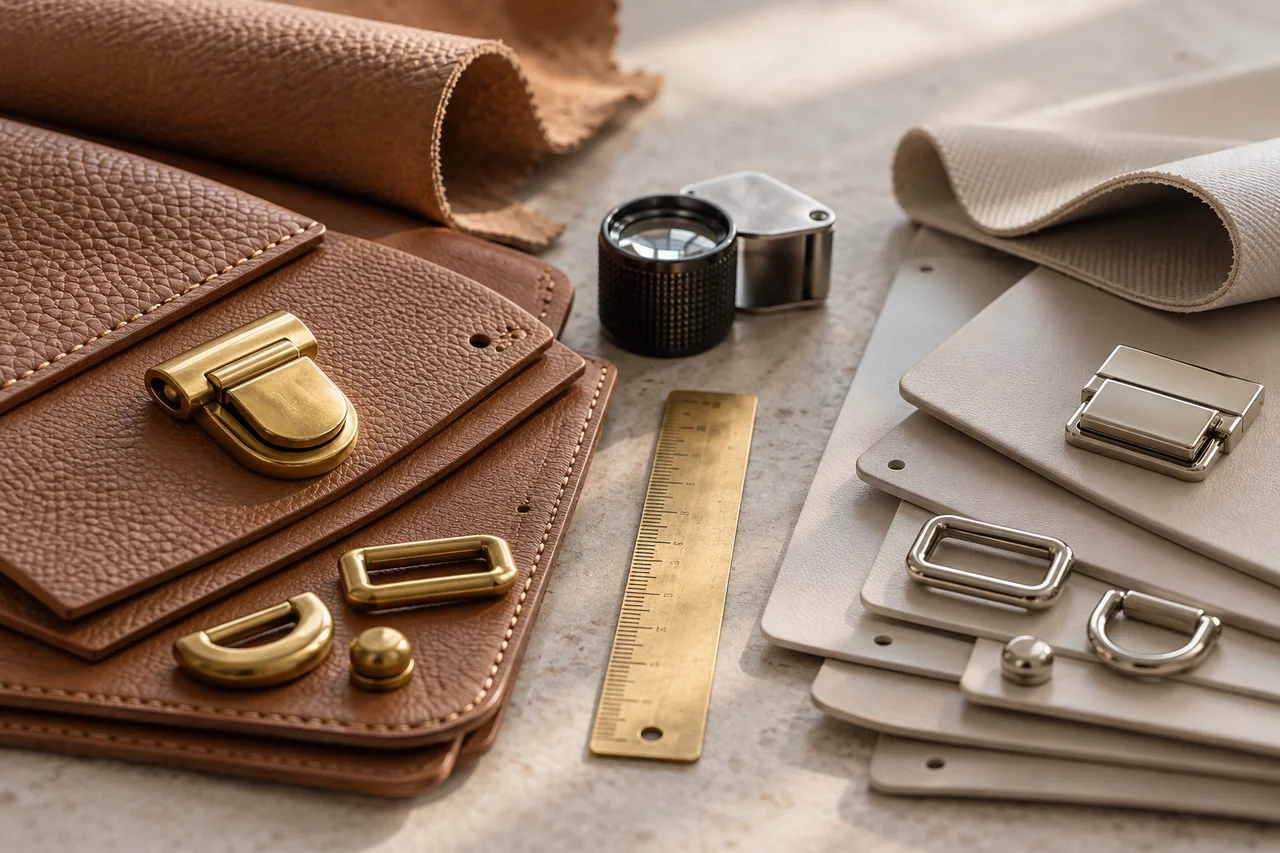
Lowering costs without degrading product quality is a technical skill. Target price engineering means systematically adjusting internal construction, material yield, hardware specs, and lining choices to hit a predetermined margin—while preserving the visual integrity customers actually see.
How it works in practice:
When a sample comes in over budget, weak partners shrug. Strong partners offer alternatives:
- Swapping edge-paint treatments for folded construction
- Re-engineering interior pocket configurations to reduce fabric waste
- Sourcing high-grade PU or textile alternatives that photograph identically to leather
This kind of problem-solving protects your gross margins without compromising shelf appeal.
—
5. Multi-Craft Sourcing & Material Coordination
Modern seasonal collections—especially spring/summer and resort lines—pull from diverse craft specialties that single factories can’t house under one roof: hand-beading, embroidery, natural straw weaving, crochet, structured box bag fabrication.
The coordination challenge:
Managing five niche suppliers directly means juggling five sampling timelines, five quality protocols, five shipping schedules. A unified development partner orchestrates these specialized vendors into one consolidated delivery stream.
What to verify:
- Can they seamlessly coordinate across distinct craft categories?
- Do they maintain consistent hardware finishes and component specs across multiple suppliers?
- Can they scale specialty production without sacrificing artisan quality?
6. Production Follow-Up & Quality Control
Most execution failures happen in the gap between sample approval and bulk shipment.
Audit their QC systems:
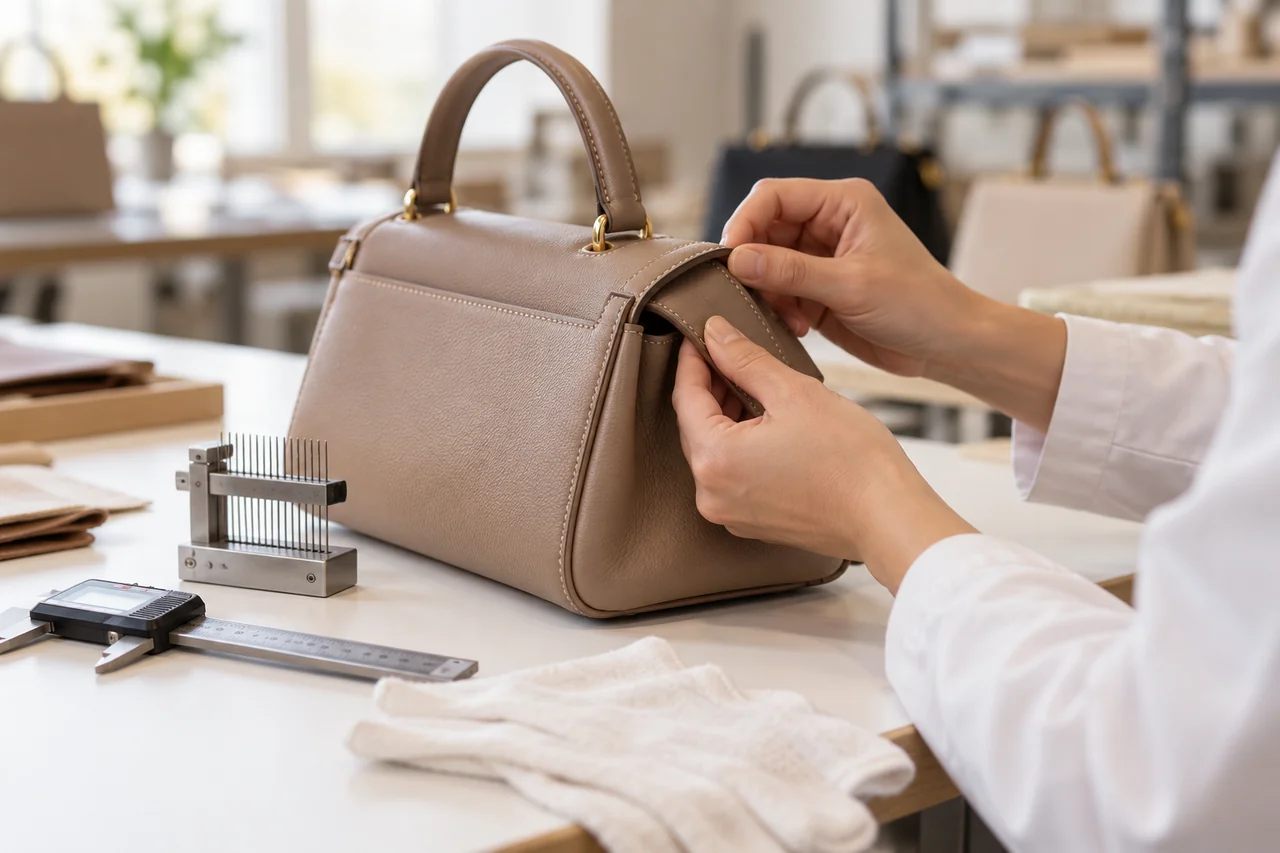
- What inline and final AQL inspection procedures do they enforce?
- How do they monitor raw material consistency—leather tanning, edge-paint curing, hardware plating durability, stitch tension?
- Do they conduct pre-shipment audits with photographic documentation?
Consistent quality across repeat orders protects brand reputation and reduces costly return rates.
—
Case Study: Managing a Complex Seasonal Launch
Consider a mid-sized retailer preparing a 12-SKU resort collection featuring structured leather frames, hand-woven raffia totes, and beaded evening clutches.
Without strategic coordination:
The retailer manages four separate specialized factories directly. Hardware plating colors don’t match across vendors. The beaded clutch lands 35% over target with no redesign path. The raffia tote delays by four weeks while sample approvals stall in email threads. Result: missed launch window, compressed margins, frustrated merchandising team.
With a development partner managing the ecosystem:
The partner receives product concepts and target retail pricing. Trend and design teams refine line architecture and standardize hardware specs globally. Engineers adjust internal reinforcements to hit margin targets. The multi-craft network coordinates weavers, bead artisans, and assembly facilities under unified QC. Single consolidated delivery, on time, on budget.
The difference isn’t just operational—it’s commercial viability.
How SOCCI Connects the Supply Chain
SOCCI doesn’t replace factories. We operate upstream, ensuring every collection is commercially viable, structurally sound, and cost-engineered before production begins.
While individual factories focus on manufacturing output, SOCCI bridges market demand, design decisions, material sourcing, engineering, and production execution. We coordinate vetted networks of specialized craft manufacturers—hand-beading experts, straw weavers, embroidery specialists, box bag fabricators—and manage sample timelines, quality standards, and component logistics centrally.
For fashion retailers, importers, and brand managers launching seasonal collections, that integration layer reduces friction, protects margins, and delivers cohesive lines.
—
Frequently Asked Questions
What separates a handbag factory from a sourcing partner?
A factory executes production based on finalized tech packs. A sourcing and product development partner operates earlier in the cycle—managing trend analysis, product strategy, material sourcing, cost engineering, multi-craft supplier matching, and quality control across the full product lifecycle.
Why not just go direct to a factory?
Direct factory relationships work well for repeat styles with locked specs. But when you’re launching seasonal collections that require trend adaptation, multiple craft specialties, or tight cost targets, a strategic development partner reduces management complexity and protects profit margins.
How does target price engineering work without cutting quality?
It’s about analyzing structural components—internal backing materials, fabric yield efficiency, lining selections, hardware assembly methods—to lower costs. Strong partners modify hidden technical details and production methods instead of degrading visible materials customers interact with.
How does SOCCI handle specialized craftsmanship?
We coordinate a vetted network of craft specialists across categories: hand-beading, embroidery, natural straw weaving, crochet, rigid box construction. SOCCI manages sample timelines, quality standards, and component logistics centrally, delivering unified collections.

Evaluation Checklist
Before your next seasonal development agreement, assess your partner against these criteria:
- Proactive market insight: Do they bring trend direction and material innovations to the table, or only execute your sketches?
- Structural problem-solving: Do they offer technical modifications when a design is unproducible or over budget?
- Multi-craft reach: Can they manage diverse fabrications under one central management stream?
- Transparent engineering: Do they explain cost drivers and offer clear trade-offs?
- Systematized quality control: Do they enforce standardized inline inspections across all manufacturing partners?
—
Ready to strengthen your handbag product development process?
Partner with SOCCI to integrate trend intelligence, cost engineering, and multi-craft production execution into one cohesive workflow. Contact our product development team to discuss your upcoming seasonal collection.